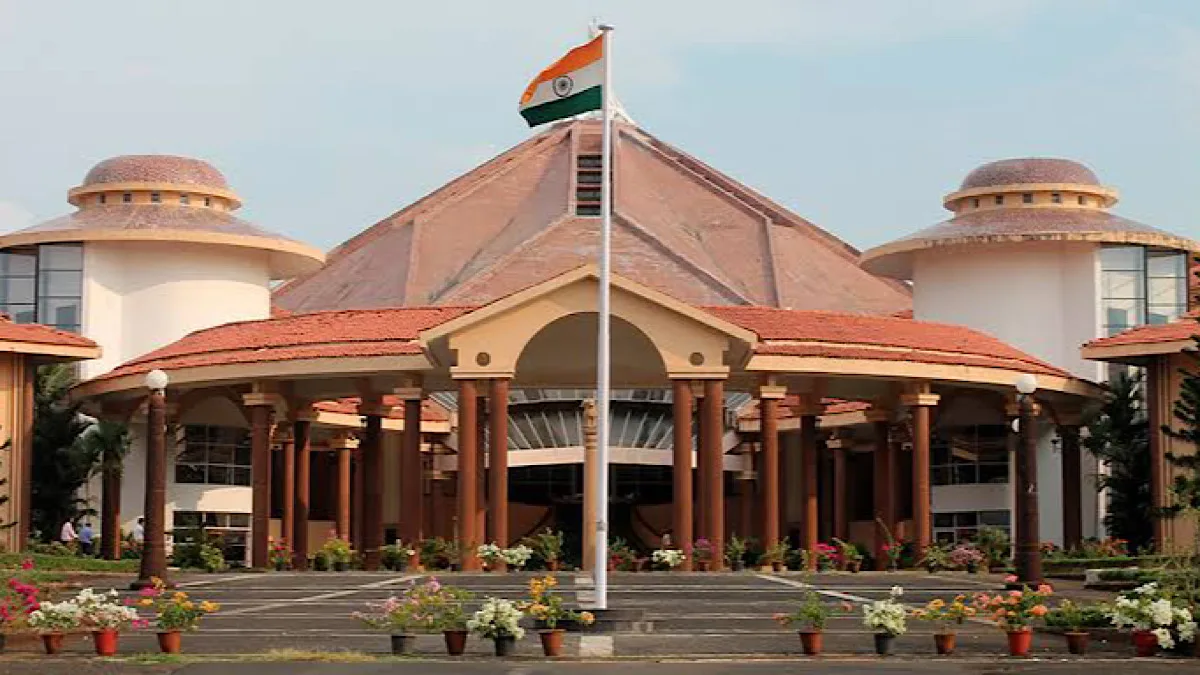
The Readjustment of Representation of Scheduled Tribes in Assembly Constituencies of the State of Goa Bill, 2024, was passed amid din in the Lok Sabha, without discussion, on Tuesday.
The bill, which was introduced in the House of the People on August 5 last year, seeks to reserve seats in the Goa Legislative Assembly for Scheduled Tribes.
Advertisement
The government had moved the bill for consideration of the lower House even as the Opposition parties continued with noisy protests demanding a discussion on the Special Intensive Revision (SIR) of electoral rolls in Bihar. The bill was, however, taken up for passing without discussion and was approved with a voice vote amidst disruption.
The Statement of Objects and Reasons to the Bill noted that currently, there is no reservation for persons belonging to ST communities in the Goa Assembly. This is due to the negligible population of recognised ST communities historically. However, this has changed with the recognition of certain communities as STs over the time.
In 2001, Goa’s ST population was negligible, with 566 out of over 13 lakhs. After three communities – Kunbi, Gawda, and Velip – were added to the ST list in 2003, the ST population grew to 149,275 as per the 2011 census.
Despite the increased population, no seats were reserved for STs in the Goa Legislative Assembly, denying them the constitutional benefits of reservation under Article 332.
The Bill requires the Census Commissioner to estimate the population of the persons belonging to ST communities in the state. The estimation will be based on the 2001 census. The Census Commissioner is appointed by the central government under the Census Act, 1948.
The Election Commission will make amendments to the Delimitation Order to provide for the reservation of seats in the Assembly. This will be based on the population determined by the Census Commissioner. The Election Commission must invite suggestions from the public and consider objections before making amendments to the Delimitation Order. The reservation will be applicable to all elections held onward from the dissolution of the current Assembly.